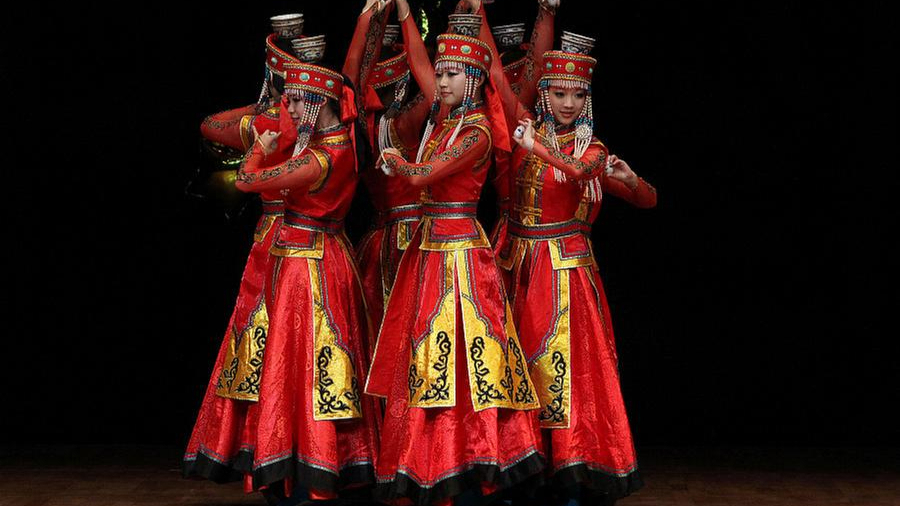
Andai Dance
Introduction
The Andai Dance is a traditional performance art of the Mongolian ethnic group, originating from the Horqin Grassland in Inner Mongolia autonomous region. As one of the region's most cherished cultural expressions, this dance has evolved from its early religious and ceremonial roots into a vibrant symbol of Mongolian identity.
Historically, it was performed during rituals to invoke blessings from deities, seek protection from illness, and drive away misfortune. Over time, Andai Dance has also become a popular form of entertainment during festivals and gatherings, embodying the spirit of Mongolian folk traditions.
Features
The Andai Dance is characterized by its unique style, with a combination of rhythmic footwork, vigorous body movements, and graceful gestures. Performers, usually women, wear traditional Mongolian attire, which includes colorful costumes, headgear, and flowing scarves that accentuate their movements. The dance itself involves intricate steps that mimic the rhythms of nature, including imitations of animal movements, reflecting the deep connection of the Mongolian people to their environment.
Accompanied by traditional Mongolian music, especially the sounds of the morin khuur (horsehead fiddle) and other indigenous instruments, the dance conveys both solemnity and joy. The circular and wave-like motions of the dance reflect themes of unity, fertility, and the cyclical nature of life, with each step symbolizing a deeper cultural or spiritual meaning.
Cultural Significance
The Andai Dance holds significant cultural importance, particularly among the Mongolian people. It is often performed during major festivals, weddings, and public celebrations, as well as in religious rituals. In its earlier forms, it was primarily a shamanistic dance, performed by shamans to invoke blessings and ward off evil spirits. Today, it continues to play a role in preserving and expressing Mongolian cultural identity, promoting unity and social cohesion within communities.
The dance has also been recognized for its health benefits. The physical exertion required in performing Andai Dance provides cardiovascular and muscular benefits, contributing to both the physical fitness and well-being of its practitioners. This aspect has led to its inclusion in fitness programs and cultural exchanges.
In 2006, the Andai Dance was listed as a national-level intangible cultural heritage in China, which ensures its protection and promotion. This recognition underscores the dance's role in reflecting the history, traditions, and artistic achievements of the Mongolian ethnic group. As part of the broader effort to preserve traditional arts and cultures, the Andai Dance is taught in schools and performed by professional troupes across Inner Mongolia.








